
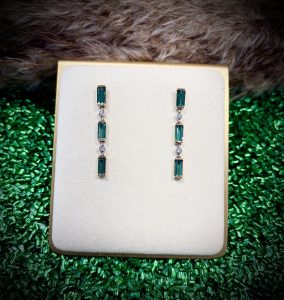
Stunning ins-stock tourmaline and diamond earrings in 14KY yellow gold
As we draw nearer to St. Patrick’s Day, it’s common knowledge that everyone is a little bit Irish on March 17. In addition to rainbows, leprechauns, shamrocks, corned beef and cabbage, Guinness, and (of course) St. Patrick himself, there is a common theme that runs through this festive mid-March holiday: the legend of the pot of gold at the end of the rainbow. With gold reaching historic highs this year, St. Patrick’s Day 2026 is the perfect time to examine the history of gold jewelry–as well as some beautiful pieces that we have in-stock at Gilded Design Studio, and bespoke pieces that we have created for customers!
A Brief History of Gold Jewelry
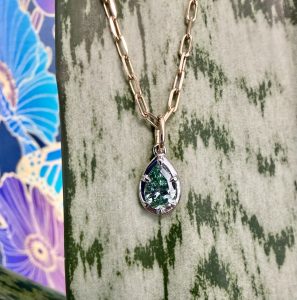
Custom pear-shaped green lab diamond pendant we created for a customer
Gold jewelry has been a precious commodity for more than 6,000 years. The oldest known gold jewelry is from modern-day Bulgaria, and dates to roughly 4,000 BC. Ancient societies prized gold for many of the same reasons that we do today: it doesn’t tarnish or rust, and it is extremely easy to shape. In Ancient Egypt, gold was known as the “flesh of the gods”, and Pharaohs were buried with large amounts of the precious metal in their tombs. As society advanced, metalwork became more intricate and complex, such as the gold headdresses and necklaces found in the Royal Cemetery of Ur (Ancient Mesopotamia). Ancient Greece introduced filigree (intricate ornamental metalwork) and granulation (bonding tiny spheres of precious metal onto a metal surface to create complex, textured patterns) techniques to jewelry-making, and in Ancient Rome, gold rings denoted status and citizenship. During the Middle Ages, gold jewelry represented power, religion, and status, as jewelry designs were often heavily influenced by the church. There were even laws that restricted gold jewelry to the elite classes! During the Renaissance period, jewelry became more decorative and expressive in design, and the symbolism of pieces began to incorporate more than religious symbols.
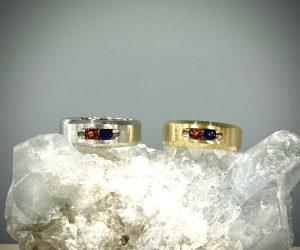
Whether you prefer yellow gold, white gold, or rose gold, there’s a flattering and luxurious shade of this precious metal for everyone
The Industrial Revolution changed the jewelry industry forever. Once machine production became available, that enabled jewelry to be made for far lower costs and there was larger availability…for the first time in history, middle-class individuals could afford gold jewelry. From the Victorian Era and beyond, styles changed constantly–from sentimental pieces to bolder, geometrical Art Deco styles, the trends were evolving constantly. Prior to World War II, platinum was considered to be the most fashionable choice for engagement rings, but once the war started, it was restricted to military use…so jewelers began to switch to using gold. Following WWII, gold (especially 14K) remained an industry standard due to its durability and affordability. Today, most engagement rings are made of gold–roughly 60% of engagement rings in the United States are made from 14K gold settings.
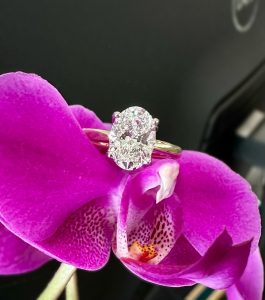
A stunning ring designed for a customer
What does a 14K (or 10K or 18K) stamp on my jewelry mean?
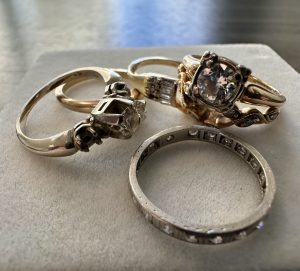
We purchase gold for the scrap value–customers can choose to receive a check for the amount their gold is worth. They also have the option of using the value of their scrap credit towards a custom design incorporating stones they already had into a new piece to cherish.
Pure gold (24K) is extremely soft, so it is not a practical choice for gold jewelry that will be worn every day. To increase durability, jewelers mix pure gold with other metals. Popular gold alloys include 22K gold (91.7% gold/8.3% other metal), 18K gold (75% gold/25% other metal), 14K gold (58.3% gold/41.7% other metal), and 10K gold (41.7%/58.3% other metal). Alloy metals include copper, zinc, silver, nickel, and palladium–and the color and strength of the gold depends on which alloy is used.
Why does gold come in so many colors?
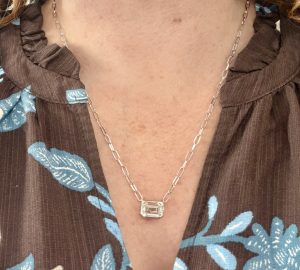
A beautiful, meaningful pendant we designed for a client
As mentioned above, gold comes in several main colors–yellow, white, or rose. Yellow gold jewelry is typically gold mixed with silver and copper, whereas white gold is gold mixed with palladium and or nickel, and rose gold is created by a mixture of gold and copper. Yellow gold tends to be the most popular color of this precious metal, as it is the natural color of gold, though white gold became extremely popular in the 20th century due to its resemblance to platinum. Rose gold became very trendy in the 2010s, as its pink hue often gives a softer, more romantic look to jewelry.
How do I care for my gold jewelry?
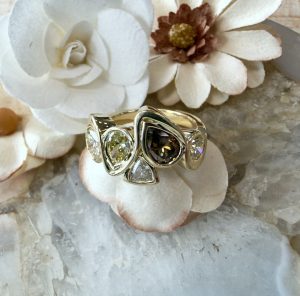
An incredible wedding ring we created for a client, that features her own diamonds set in a custom setting, designed by Becca
Gold jewelry is very durable, and with proper care, can last for generations. To keep your pieces sparkling, make sure to clean them regularly as over time jewelry accumulates skin oils, lotion, dust, and soap residue. A simple way to clean your gold jewelry at home is to place your pieces in a bowl with warm water and mild dish soap. After soaking for 10-15 minutes, you can use a soft toothbrush to gently clean crevices, rinse with clean water, and finally dry with a soft, lint-free cloth. Obviously, you will want to avoid cleaning your jewelry with anything abrasive, as you don’t want to scratch the gold.
To keep your gold shining, make sure that you avoid harsh chemicals, such as chlorine (this is a big one), bleach, household cleaners, strong cosmetics, and hair dye. To protect against scratches, always removed your gold jewelry before sports or heavy work, avoid wearing multiple rings on the same finger that might rub against each other, and always store your pieces separately. Additionally, make sure to regularly check your settings and clasps for damage to prevent loss! Over time, white gold pieces need to be re-plated with rhodium to maintain their shine. which is a service we are proud to offer here at Gilded Design Studio. You can also stop by any time for a free cleaning and inspection of your gold jewelry to make sure everything looks good!
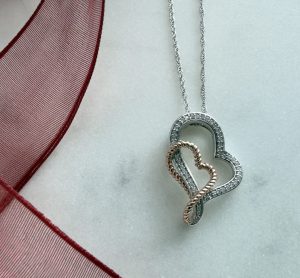
Beautiful in-stock pendant
Whether you are carefully choosing what type of jewelry to invest in for the first time, or you have many pieces that you cherish, we are excited to be a part of your jewelry journey!